Were you aware that over 75% of sewer line clogs in business districts originate from restaurants and food venues? These backup-causing clogs often start with fats, oils, and grease (FOG) buildup that could have been prevented with routine maintenance.
Visit Website Of Grease Trap Pumping

Find Out More About Grease Trap Pumping

Go To Website Of Grease Trap Pumping
Every commercial kitchen runs into the challenge of handling FOG waste. These substances can cause severe drain issues if not managed properly. Proper management is critical for day-to-day efficiency and code compliance.
Grease Cleaning Pros specializes in helping restaurant operators and commercial kitchens maintain efficient drainage systems. We understand that this type of work isn’t flashy, but it’s completely essential. Our team makes the process low-stress for busy food service professionals.
Skipping this crucial maintenance can lead to unpleasant consequences. Health code violations, unpleasant smells, and costly plumbing emergencies are just the start. In worst-case situations, establishments can face forced shutdowns by local authorities.
This comprehensive guide will take you through everything you need to know. You’ll learn about how the system works and smart maintenance methods. We’ll help you understand when a DIY approach is fine and when to bring in professionals.
Key Takeaways
- Proper FOG management helps prevent costly sewer system blockages
- Routine maintenance helps ensure compliance with health regulations
- Professional service reduces plumbing emergencies and odor problems
- Knowing your system supports better maintenance planning
- Timely intervention prevents business disruptions and fines
- Expert help simplifies complex maintenance requirements
- Proactive care helps maintain optimal kitchen operations
Understanding The Role Of Grease Traps In Food Establishments
Many restaurant owners don’t realize that their kitchen’s plumbing contains a dedicated device designed specifically to capture kitchen byproducts. This equipment plays a crucial role in preventing serious municipal system issues.
How Grease Traps Work
A grease trap functions by slowing wastewater flow, allowing fats, oils, and grease particles to cool and harden. As these FOG materials separate, they rise to the surface while food particles drop to the bottom.
Internal baffles create barriers that prevent the captured materials from entering the outlet pipe. This ensures that only clear water continues into the sewer system, protecting your plumbing and municipal infrastructure.
There’s a common misunderstanding that these devices break down grease. In reality, they simply capture and contain them until licensed removal teams can properly dispose of the accumulated substances.
Differences Between Grease Traps And Grease Interceptors
While both devices serve the same main job, they differ significantly in scale and application. Standard grease traps typically have capacities under 250 gallons and install beneath kitchen sinks.
Grease interceptors handle much larger volumes, with capacities exceeding 5,000 gallons. These larger units usually install outdoors under the ground, serving busy, high-volume operations with more demanding needs.
Understanding which system your operation uses helps maintain best performance. Proper knowledge ensures you can work effectively with maintenance professionals to keep your kitchen running efficiently.
Preparing For Effective Grease Trap Cleaning
Before tackling this dirty job, smart kitchen managers focus on two critical areas: the right equipment and personal safety. Getting set up first makes the entire process smoother and safer for everyone for everyone involved.
Gathering Your Tools, Equipment, And Supplies
Having the right tools on hand is important. You will need a specific set of items to handle the task properly and dispose of waste correctly.
- Wet/Dry Vacuum: For removing liquid and solid waste efficiently.
- Ladles and Scoops: Useful for hands-on removal of hardened materials.
- Buckets and Airtight Containers: required for temporary storage and proper disposal of FOG waste.
- Scrub Brushes: For scrubbing the interior walls of the tank.
A simple preparatory step involves running cool water through the system for about ten minutes. This helps fats and oils set, making them much easier to remove later.
Implementing Safety Measures And PPE
Safety should never be an afterthought. The environment inside these units can harbor harmful bacteria and present chemical risks.
Always wear full personal protective equipment (PPE) before starting. This includes thick gloves, safety goggles, a nose plug, and coveralls. This gear protects you from splatter, bad smells, and direct contact with contaminants.
It’s also wise to have the contact information for a licensed plumber readily available. This ensures professional help is on hand if you encounter unexpected issues, like damaged baffles.
For smaller units under sinks, a DIY approach is possible. However, for most commercial kitchens, professional services eliminate the mess factor, health concerns, and significant time investment.
Grease Trap Cleaning – Step-By-Step Techniques
Following a systematic approach ensures your FOG control unit functions properly between professional services. This hands-on guide breaks down the procedure into clear, manageable stages.
Initiating The Cleaning Process
Begin by donning your protective gear and running cool water through the system for about 10 minutes. This cooling period helps FOG materials set for easier removal.
Carefully remove the lid using appropriate tools. Metal covers might need a pry bar or socket wrench, while plastic lids typically come off easily. Always work cautiously to avoid damage.
Efficient Removal Of FOG And Debris
Use a ladle to scoop the hardened film floating on the water’s surface. Place this material in air-tight containers for appropriate disposal according to local regulations.
Move on to a wet/dry vacuum to pull out any remaining liquid and solid particles. Make sure all kitchen drains are shut during this process to avoid backflow.
Scrub the interior walls, lid, and baffles with warm, soapy water using a metal scrub pad. This eliminates residue and prevents unpleasant odors from building up.
Finish by running a gallon of warm water down the drain to clear the system. Even water flow shows successful maintenance. Reinstall all components properly once complete.
While these steps work for under-sink units, larger systems often require professional grease trap cleaning services that handle everything with maximum efficiency.
Maintenance Strategies For A Healthy Kitchen
Proactive care for your establishment’s drainage infrastructure pays off in operational efficiency. Routine upkeep reduces the risk of unexpected shutdowns during busy hours.
Regular upkeep eliminates unpleasant smells that can drive customers away. It also deters pests that threaten your establishment’s hygiene standards.
Preventing Clogs And Unwanted Odors
Set up a routine schedule based on your kitchen’s specific needs. High-output kitchens with multiple fryers require more frequent attention.
Do not ever dumping cooking oil down sinks or toilets. Use designated containers for approved disposal instead. Limit garbage disposal usage to avoid food particles from accumulating.
Avoid using soap or degreasers that can dissolve materials. This defeats the system’s purpose and leads to downstream plumbing issues.
Routine Inspections And Compliance With Standards
The majority of municipalities require specific maintenance intervals. Violations can result in costly citations or short-term closures by health authorities.
Apply the 20% rule for optimal performance. Service is needed when materials reach roughly one-quarter of the liquid level.
| Kitchen Type | Recommended Frequency | Capacity Threshold |
|---|---|---|
| Standard Operations | Every 1-3 months | 15% capacity |
| High-Volume (Multiple Fryers) | Multiple times monthly | 26% liquid level |
| Small Under-Sink Units | Weekly | 20% liquid level |
Planned professional services help ensure compliance while extending equipment lifespan. This proactive approach maintains optimal kitchen operations year-round.
Professional Services By Grease Cleaning Pros
Running a successful food service business demands focusing on your customers, not plumbing emergencies. That’s where Grease Cleaning Pros offers exceptional value for restaurant owners and commercial kitchens.
Our team helps make scheduling maintenance easy. Use our online booking tools for scheduled appointments or call our 24/7 emergency line for time-sensitive issues.
Service Overview And Expectations
When our technicians arrive, they begin with a thorough inspection of your system. This allows us to provide clear, transparent quotes with no unexpected costs.
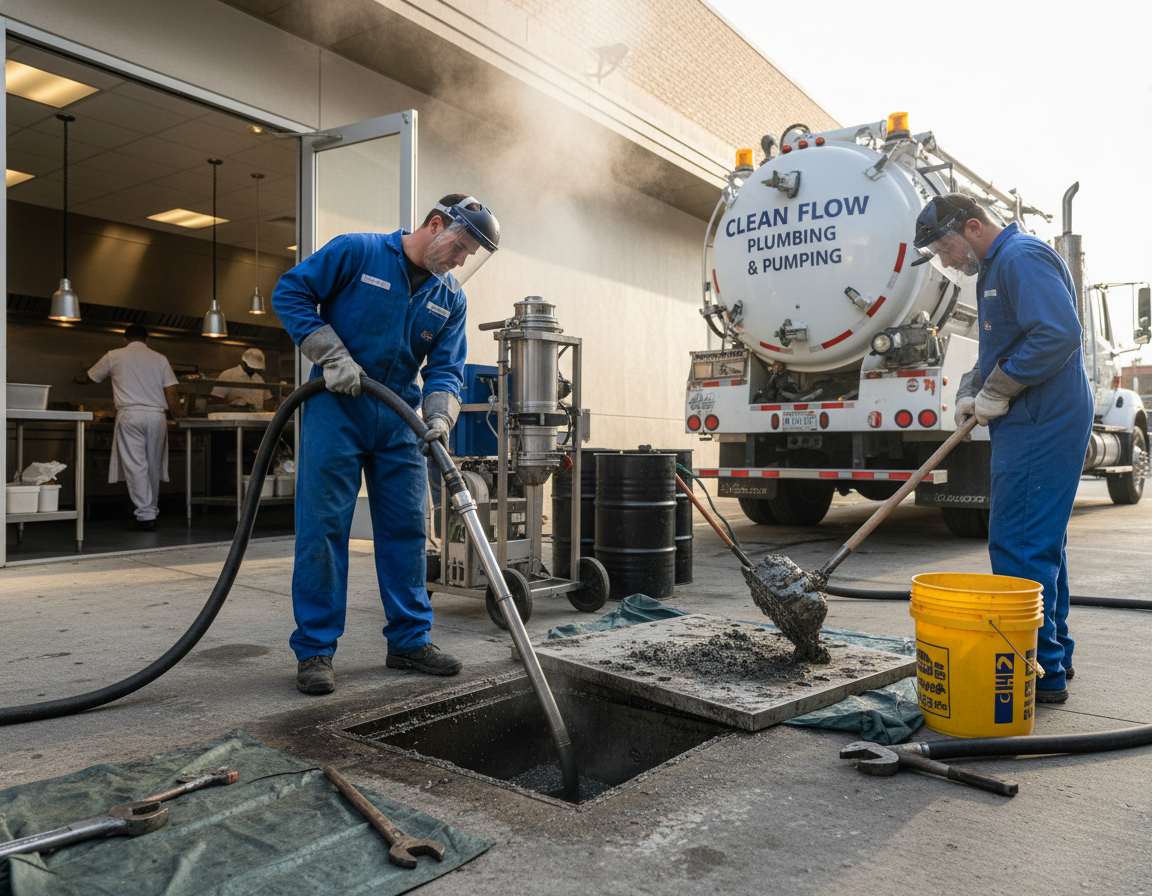
We use high-powered, specialized equipment to quickly remove materials from your unit. Our truck-mounted storage tanks handle the waste while we clean all components end to end.
During the process, we flag any malfunctioning parts. Most repairs can be completed during the visit, reducing the risk of future problems.
Benefits Of Partnering With Experts
Arguably the greatest advantage is proper disposal handling. We take collected materials to approved facilities, removing this challenge for your staff.
Consistent maintenance programs ensure your system receives attention at ideal intervals. This reduces emergencies and keeps your kitchen compliant with regulations.
Considering the time savings, safety improvements, and peace of mind, professional service is highly cost-effective for fast-paced food establishments.
Final Thoughts On Efficient Grease Trap Cleaning
Effective FOG management separates successful food establishments from those facing constant plumbing issues. Although this maintenance task might not be glamorous, it’s absolutely essential for reliable kitchen operations and regulatory compliance.
This guide has covered everything from understanding how these systems work to proper cleaning techniques. Routine maintenance prevents costly emergencies and keeps your facility running without disruption. Professional services eliminate the hassle, allowing your team to focus on serving great food.
Evaluate your current maintenance practices today. Are you adequately protecting your plumbing system and preventing odors? Contact Grease Cleaning Pros for a professional evaluation. With the right approach, managing your kitchen’s essential equipment becomes easy and hassle-free.
Related: Choosing Certified Experts for Grease Trap Pumping Palmdale